

Around the World - Show Notes
19 June 2026
You can listen to Around the World on Mixcloud

Music by: Ablaye Cissoko, Kiya Tabassian & Constantinople, Agrippa Njanina, Albaluna, BCUC, Bodh’aktan, Bojana Nikolic, Cheikh Ibra Fam, Cocanha, Estudiantina of Melbourne, Fatoumata Diawara, Felix Antonio, Hannah Peel & Beibei Wang, Kareyce Fotso, Le Diable à Cinq, Maryam Saleh, Muca, Roberto Menescal & Mirella Costa, Neta Elkayam, Nuevos Rios, Orquesta Akokán, Rézeleje Fanfárosok, Sekvoya, Shye Ben-Tzur, Jonny Greenwood & The Rajasthan Express, Silvana Estrada & pablopablo, Sulaf, and Tamikrest
This Week’s Featured Album: Maja by Katalena
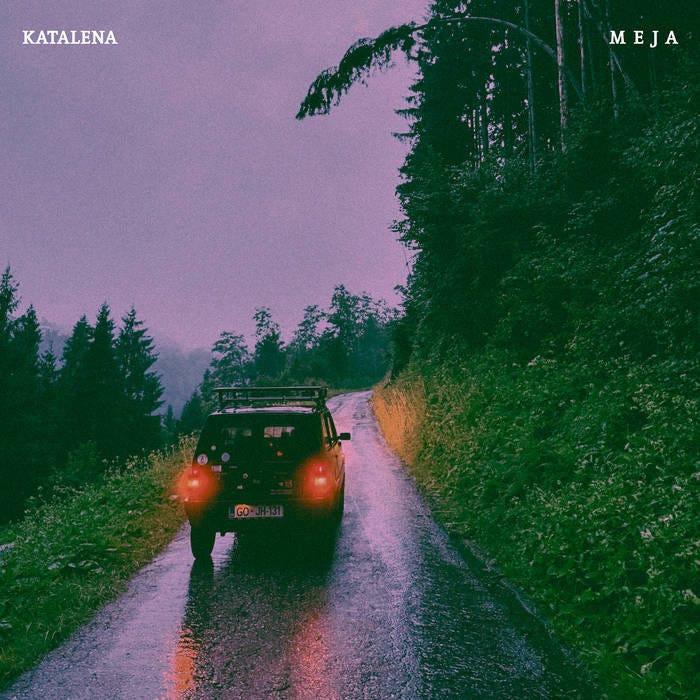
Slovenia is one of my favourite places in the world, and one of the things I find interesting is the language. For a country of just over two million people, it has an extraordinary linguistic landscape — up to fifty dialects and sub‑dialects. A few weeks ago, I was having dinner with the former mayor of Bled, and he told me that the dialect he grew up speaking is noticeably different from the one used just a few kilometres away in Bohinj.
This week’s featured album by Katalena is Meja which translates as Borders. It’s an album about borders in every sense: geographical, cultural, emotional, and the ways they both divide and connect.
KATALENA - PLOVI MI, PLOVI
Much of the focus is on the frontier with Italy, where Slovenian dialects are still spoken. One of the songs, “Kafolawa,” takes its name from a traditional Resian family matronymic — essentially the mother’s house‑name. In the remote Resia Valley in northern Italy, in the region sometimes known as Venetian Slovenia, these house‑names sit alongside official surnames and help distinguish different family branches. Another track, “Učja,” is named after the river that forms less than a kilometre of the Italian–Slovenian border. The Uccea rises high in the mountains of Friuli Venezia Giulia in northern Italy, slips east through a narrow, secluded valley, crosses the border to become the Učja, runs its short six‑kilometre course, and meets the emerald Soča just below the village of Žaga.
Katalena are one of Slovenia’s most inventive and influential folk‑fusion bands. Formed in Ljubljana in 2001, they’ve always treated traditional songs not as museum pieces but as living material to be re‑imagined. Their sound blends folk melodies with rock, jazz, and experimental textures, anchored by the powerful voice of Vesna Zornik and the multi‑instrumental versatility of the group around her. Across their albums — each one exploring a different corner of Slovene musical heritage — they’ve brought archival songs and forgotten stories back into contemporary circulation. With Meja, their tenth album, they turn their attention to the borderlands of western Slovenia and the Resia Valley, continuing their long‑running project of showing just how rich and varied Slovenian folk culture can be.
Also on the show
Rézeleje Fanfárosok – “Batuta” – Fúgamadár
Rézeleje Fanfárosok formed in Budapest in 2020, blending Hungarian folk and jazz backgrounds into a brass‑heavy Csángó/Balkan sound.
Cheikh Ibra Fam – “Sali” – Adouna
It is a cross‑continental collaboration, featuring musicians from Senegal, Réunion Island, The Gambia, Rwanda and the U.S.
Sekvoya – “Devils Town” – The Magic of Slavic Rituals – EP
“Devils Town” opens the EP The Magic of Slavic Rituals, released via Zero Nove Nove. The EP is the second chapter of a planned trilogy, exploring Slavic mysticism, ritual and enchanted landscapes. All music is composed, arranged, performed, recorded and mixed by Serbian guitarist‑producer Ivan Krsti.
Albaluna – “Anascer (V.2026)” – Anascer (V.2026) – Single
Albaluna (founded 2010) are known for fusing Mediterranean, Iberian and Silk Road traditions with modern instrumentation. The track features Albaluna’s hallmark blend of viola braguesa, electric guitar, tin whistles, adufe, darbouka, violin and layered vocals.
Tamikrest – “Iman Derhan Nasn” – Assikel
Assikel was recorded live to analogue tape at Tone Boutique Studio in Haarlem, capturing a raw, immediate sound. The album blends Ishumar rock, Tuareg folk rhythms and touches of Americana (including lap steel and dobro).
Le Diable à Cinq – “Les chaises d’Amédée” – Indomptable
Le Diable à Cinq come from Lanaudière, one of Québec’s strongest centres for living folk‑dance traditions. Their sound is built around fiddle, accordion, guitar and podorythmie, giving the tune its tight rhythmic lift.
Kareyce Fotso – “Somo” (feat. Blick Bassy & Romain Jovion) – Gwà
“Somo” continues the album’s focus on female resilience, community bonds and Bamiléké cultural identity. Fotso’s performance style draws on body percussion and traditional rhythms, anchoring the song in Cameroonian storytelling traditions.
Orquesta Akokán – “No Me Voy” (feat. Carolina Oliveros) – América!
Orquesta Akokán specialise in 1950s Havana mambo, recorded live‑to‑tape for maximum vintage punch. Carolina Oliveros (Combo Chimbita) brings a Colombian cantadora‑style vocal that cuts through the Cuban big‑band arrangement.
Estudiantina of Melbourne – “Kiriokostaki” – ΤΑ ΝΙΣΙΑ
The group is part of Melbourne’s large Greek‑diaspora music scene, preserving repertoire rarely recorded outside Greece. “Kiriokostaki” appears on ΤΑ ΝΙΣΙΑ (“The Islands”), a project celebrating Aegean island songs and dance forms.
BCUC – “Umdumakhanda” – The Road Is Never Easy
BCUC (Bantu Continua Uhuru Consciousness) are a Soweto‑based collective known for long, trance‑driven pieces mixing ancestral rhythms and protest energy.
Silvana Estrada & pablopablo – “Antes de Ti” – Antes de Ti – Single
The collaboration pairs Silvana Estrada with Spanish producer‑composer pablopablo (Pablo Díaz‑Reixa), known for his minimalist, atmospheric production style. The track centres Estrada’s close‑mic’d, emotionally direct vocal, supported by sparse guitar and soft electronic textures.
Hannah Peel & Beibei Wang – “Wild Geese Arrive” – The Endless Dance
The album is a collaboration between Northern Irish composer Hannah Peel and Chinese percussionist Beibei Wang, blending classical minimalism with East Asian rhythmic language. “Wild Geese Arrive” draws on Chinese seasonal imagery, part of the album’s cycle inspired by the 24 Solar Terms.
Nuevos Ríos – “La Memoria de Justino” – Nuevos Ríos
The track sits within the group’s blend of Afro‑Colombian Pacific traditions (currulao, bunde, juga) and trance‑driven electronic textures. “La Memoria de Justino” reflects the album’s focus on ancestral memory and community histories from Colombia’s Pacific coast.
Muca, Roberto Menescal & Mirella Costa – “Versos Singelos” – Muca & Roberto Menescal Beleza
The project pairs London‑based Brazilian producer Muca with bossa nova pioneer Roberto Menescal. “Versos Singelos” features vocalist Mirella Costa, whose delivery leans into classic bossa phrasing. The track blends Menescal’s trademark harmonic lightness with Muca’s modern, warm‑toned production.
Shye Ben‑Tzur, Jonny Greenwood & The Rajasthan Express – “Shiqwa” – Ranjha
“Shiqwa” continues the ensemble’s fusion of Hebrew, Urdu and Hindi poetry with Rajasthani folk and Sufi traditions. The Rajasthan Express provide the core sound: nagada drums, sarangi, brass and ecstatic rhythmic cycles. Greenwood’s role centres on arrangement, guitar textures and harmonic framing, giving the track its cinematic lift.
Flame Folclòre – “Adissiatz Palhassonaira”
Flame Folclòre are part of the new Occitan‑language folk revival, rooted in southern France’s vocal and dance traditions. “Adissiatz Palhassonaira” features their trademark mix of polyphonic vocals, frame‑drum pulse and rustic string textures.
Agrippa Njanina – “Pindirai Changambire” – Agrippa
Agrippa Njanina’s is a Belfast-based Zimbabwean musician and assistant curator. He is a highly accomplished player of the mbira (the traditional Zimbabwean thumb piano). His work and musical practices are heavily rooted in preserving and sharing Shona cultural heritage. In Shona spiritual and ceremonial traditions, the mbira dzaVadzimu (”mbira of the ancestral spirits”) is central to sacred events. “Pindirai Changambire” is a traditional song that details themes of migration, escaping a hostile environment, and leaving behind one’s kith and kin.
Maryam Saleh – “Ma’na” – Syrr
Syrr is a collaboration between Maryam Saleh, Zeid Hamdan and Tamer Abu Ghazaleh, blending Arabic indie, trip‑hop and experimental rock. The album explores urban tension, identity and emotional fragmentation, themes common in the Cairo/Beirut alternative scene.
Felix Antonio – “Rolling Down the Road” – Rolling Down the Road – Single
French singer songwriter Felix Antonio works in a roots‑folk/Americana idiom, with warm acoustic guitar at the centre of his sound.
Bojana Nikolić – “Povenula” – Povenula – Single
Bojana Nikolić is a Serbian folk vocalist known for her work with Balkan ethno‑choirs and traditional ensembles. “Povenula” draws on Serbian women’s song traditions, especially the ornamented vocal style of central and southern Serbia.
Neta Elkayam – “Juj Njimat” – Arénas
Neta Elkayam is a leading figure in the Judeo‑Moroccan cultural revival, blending chaabi, gnawa colours and Andalusian modes. “Juj Njimat” (“Two Stars”) draws on Maghrebi melodic phrasing with Elkayam’s theatrical, malhun‑influenced vocal delivery.
Sulaf – “Naada” – ABA ابّا
“Naada” appears on ABA, the 2025 debut by Sudanese‑Egyptian artist Sulaf, noted for blending Nubian, Sudanese and electronic elements. Her vocal style draws from Sudanese women’s song traditions, especially ornamented northern phrasing.
Bodh’aktan – “La tournée” – De temps et de vents
Bodh’aktan are a Québécois folk‑rock septet, known for mixing trad, punk energy and Celtic instrumentation. De temps et de vents continues their blend of sea‑shanty motifs, Québécois dance rhythms and rock arrangements.
Ablaye Cissoko, Kiya Tabassian & Constantinople – “Estuaire” – Estuaire
The collaboration unites Senegalese kora master Ablaye Cissoko with Iranian setar player Kiya Tabassian and the ensemble Constantinople. “Estuaire” blends West African griot tradition with Persian classical modal improvisation, creating a fluid cross‑cultural dialogue.
Where and when to hear Around the World
Friday:
Akaroa World Radio New Zealand - 2:00 pm local time
NAR-GROUP Germany – 2:00 pm local time
Mosel Radio Germany – 2:00 pm local time
NAR-Alf Germany – 2:00 pm local time
Waterwaves Radio England - 9:00 pm local time
Essential Radio Scotland - 10:00 midnight
Saturday:
Best City Radio (Belfast, Northern Ireland) - 6:00 am local time
Power 101FM Malawi - 11:00 local time
Flirt FM (Galway’s Community of Interest & Student Station) 101.3 - 10:45 am local time Ireland
Stirling Community Radio - 2:00 pm local time Scotland
RCFM (Radio City FM) Duisburg, Germany - 3:00 local time
World FM New Zealand - 10:00 pm local New Zealand Time
Sunday:
Power 101FM Malawi - 12:00 local time
NFRS Osaka Japan - 12:00 noon local time
973FM in Singapore - 11:00 pm local time
Circl8 Chester England - 12:00 noon local time
DCRFM (Dover Community Radio England - 7:00pm local time
Prodigal Sun Radio - 8:00 pm local time
Slice Audio Northern Ireland - 10:00 pm local time
Holywood Radio - Northern Ireland - Various times
Monday:
Armagh City Radio - 12:00 midnight local time (01:00 pm CET)
SparkFlame Radio - 00:00 am GMT (01:00 CET)
Circl8 Chester England - 12:00 noon local time
Stirling Community Radio Scotland - 10:00 pm local time
Waterwaves Radio England - 9:00 pm local time
BR2 Pure Gold Radio – Costa Blanca, Spain - 10:00 pm local time
World FM New Zealand - 10:00 am local time
Akaroa World Radio New Zealand - 10:00 pm local time
Tuesday:
Waterwaves Radio England - 9:00 pm local time
Wednesday:
World FM New Zealand - 4:00 am local time
Slice Audio Northern Ireland - 4:00 am local time
Best City Radio Northern Ireland - 10:00 pm local time
Radio Skye Scotland - 10:00 pm local time
Thursday:
Waterwaves Radio England - 9:00 pm local time